New England Newspaper of the Year
This is a one-of-a-kind competition – it is the only distinction of its kind in the newspaper industry that audience members judge. New England newspaper readers will be appointed to evaluate the entries from a news consumer point of view and decide which deserves the honor of being named Newspaper of the Year.
NENPA member publications are invited to enter five categories: Weekday newspapers, Sunday newspapers, Weekly community newspapers, Specialty Publications, and Online News Sites.
Publications will be assigned to a competitive division within their category after all entries are received (i.e., small, medium, and large weeklies, small, medium, and large dailies, small, medium, and large Sunday/weekend publications, local and regional news sites.)
Publick Occurrences Awards
This award recognizes the best work that New England newspapers produce each year— whether it’s individual or team stories, series, spot news coverage, columns, or photojournalism published in print or online during the contest period, echoing the spirit of America’s first newspaper.
Allan B. Rogers Editorial Award
Recognizes editorial writing that makes a compelling, reasoned argument and contributes to the editorial voice of a publication. The competition is open to local subject editorials from a wide variety of newspapers in New England, regardless of circulation size and frequency of publication.
New England First Amendment Award
Presented to individuals or organizations that champion freedom of the press and the public’s right to know, often at great personal or institutional risk. This award will recognize a New England newspaper for its exceptional work in upholding the First Amendment and/or educating the public about it. Entrants will be judged for the quality of reporting, editorials, commentary, and/or legal challenges that illuminate or uphold the First Amendment.
AP Sevellon Brown New England Journalist of the Year
The New England Society of News Editors bestows an annual award to an individual who produces outstanding journalism in New England. Awarded to a journalist for outstanding reporting, ethics, and leadership in news coverage over the past year.
Bob Wallack Community Journalism Award
This special award, which is named in honor of longtime New England journalist and former New England Press Association Executive Director Bob Wallack, recognizes an individual who has an exceptional record of commitment to community journalism.
The Cornerstone Award
Designed to recognize and honor unsung heroes in our news organizations who meaningfully and significantly contribute to the accomplishments of our publications without recognition. These individuals are the lifeblood of our operations, consistently providing the support and commitment needed to keep our departments and publications thriving.
New England Journalism Educator of the Year Award
Recognizes a professor at a university or college in the six-state region who is doing outstanding work to prepare journalists to lead our newspaper organizations into the future. Entries are free for this award, and NENPA membership is not required to enter. Each college in New England is entitled to submit one nomination for the award.
A-Mark Prizes
Recognizes and honors outstanding investigative journalism that reveals hidden truths, holds power to account, or drives public awareness or reform. The awards will reward ambitious, well-researched reporting that may expose a wrong, hold powerful individuals accountable, or explore a complex problem, issue, or subject. We will award up to $15,000 in each New England state. This contest is open to journalists based in New England whose primary medium is the written word, including reporters, columnists, and investigative journalists working in newspapers and online news sites. Entries are free for the A-Mark Prizes, and NENPA membership is not required to enter. All Publick Occurrences and First Amendment entries will automatically be entered for consideration in the A-Mark Prizes.
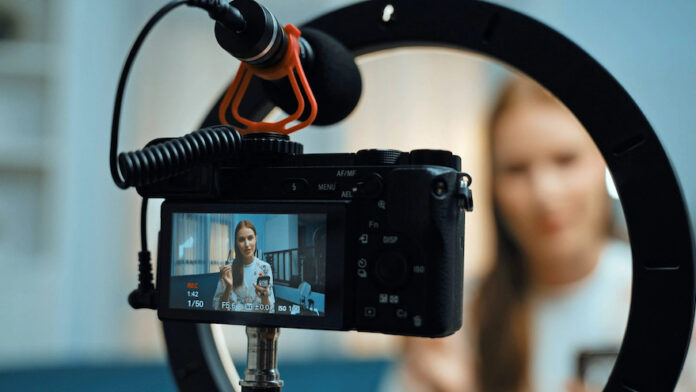
 The Nackey S. Loeb School of Communications is offering a lineup of free and low-cost classes on topics such as writing about personal milestones, making sense of Substack, learning how to make use of AI, and First Amendment rights around protest and assembly.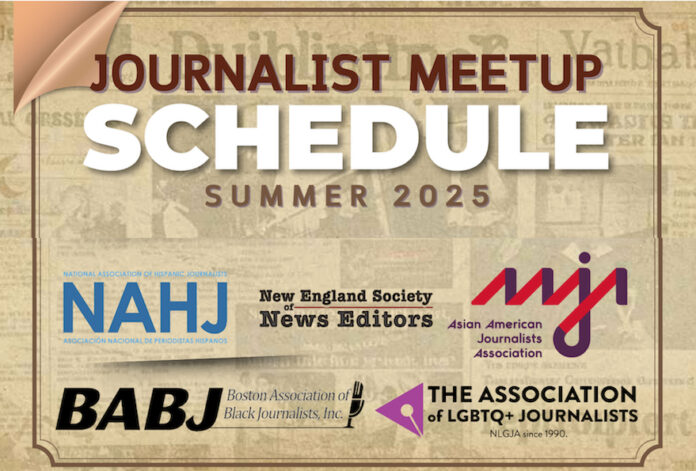
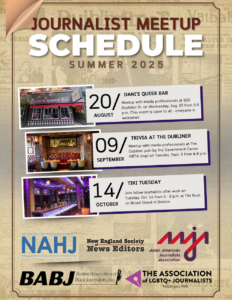 The summer 2025 journalist meetup series is in full swing, bringing together media professionals from across the region for fun, connection, and camaraderie.
 The NENPA Press Freedom and Local News Committee is taking its next major step in protecting press freedom and strengthening local journalism: launching a region-wide public education campaign on Constitution Day, Wednesday, September 17, 2025.
 The New England First Amendment Coalition is launching a legal fund to provide support for journalism and open government cases.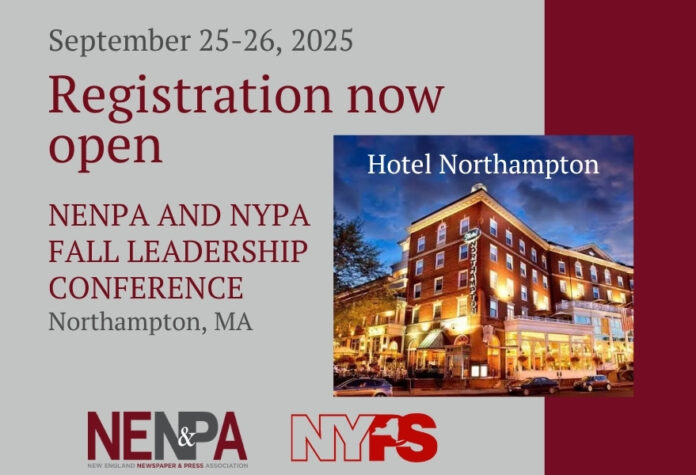
 We’re excited to invite you to the 2025 Fall Leadership Conference, hosted jointly by NENPA and the New York Press Association, happening September 25–26 at the beautiful Hotel Northampton in Northampton, Massachusetts.
 The New England First Amendment Coalition will host its 15th annual investigative journalism institute from Oct. 24 to Oct. 26 at Boston University’s College of Communication.

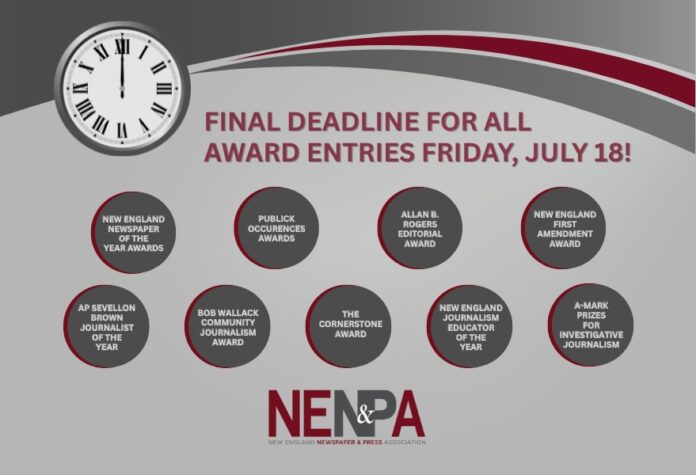
 We know many of you asked for more time to complete your entries for the New England Newspaper Awards. Good news: you have it—but not for long! The final deadline is this Friday, July 18, 2025.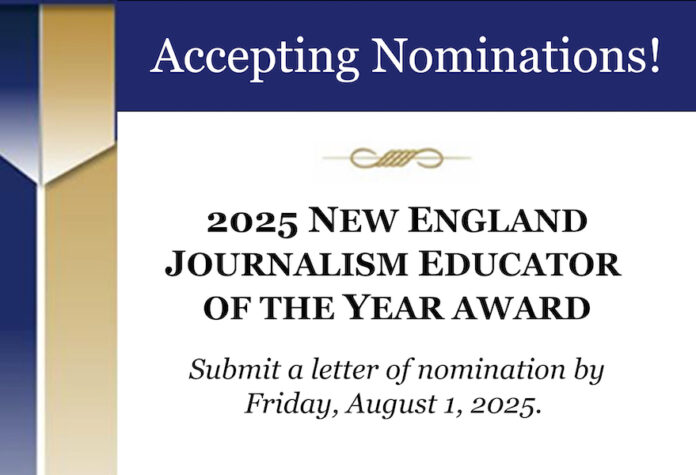
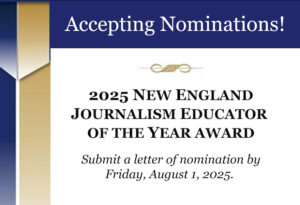 Nominations are now being accepted for the New England Newspaper & Press Association’s “New England Journalism Educator of the Year” award.